Quick answer
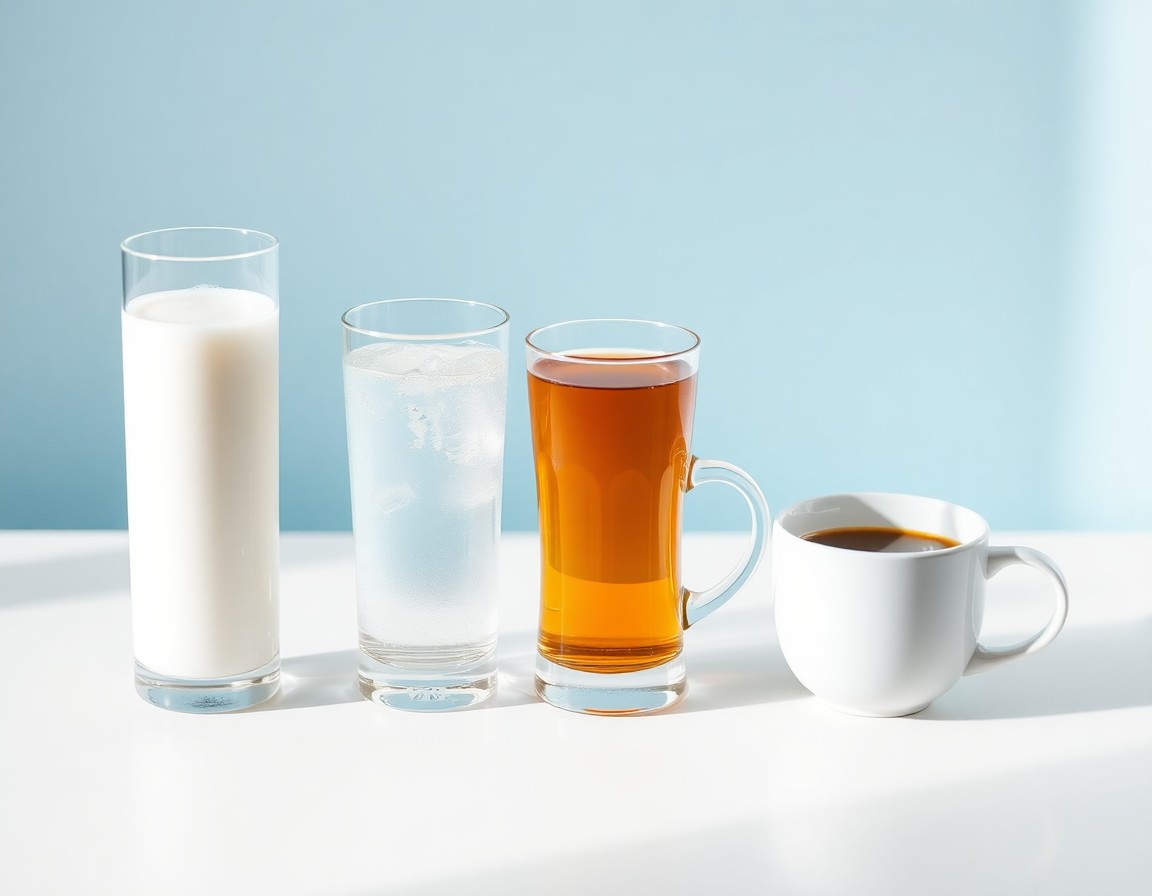
In a 2016 trial of 13 everyday drinks, skim milk, whole milk and an oral rehydration solution were the most hydrating, keeping more fluid in the body than plain water over the next few hours. Coffee, tea, cola, sparkling water, a sports drink and lager performed about the same as water.
Water seems like the obvious answer to “what's the most hydrating drink?” But when scientists measured how much of 13 everyday drinks the body holds on to, plain water was beaten by milk and a rehydration drink — and matched by coffee, tea, cola and even lager. Here's what they found, and what it means for your day.
The study that tested 13 drinks against water
In a 2016 trial at three UK universities, 72 healthy, active men aged 18 to 35 came in after an overnight fast and drank 1 liter (about 34 oz) of a test drink within 30 minutes: still water on one visit, and a different drink on each of three others. The researchers then collected all their urine for four hours.
The less urine a drink triggers, the more of it your body is holding on to. That's the idea behind the beverage hydration index (BHI), which compares the urine passed after each drink with the urine passed after the same volume of still water. Water scores 1; a score above 1 means more of the drink stayed in the body. Scores were taken at two hours, when 82% of the four-hour urine had already been passed.
The most hydrating drinks: milk and ORS
Three drinks clearly beat water: skim milk (BHI 1.58), an oral rehydration solution, or ORS (1.54), and whole milk (1.50). Over four hours, people passed about 1.3 liters (44 oz) of urine after still water but only about 1 liter (34 oz) after the two milks and the ORS — roughly 300 ml (10 oz) more fluid kept in the body. So is milk more hydrating than water? Over a few hours, yes.
Orange juice was borderline: it beat water at two hours, but its four-hour urine total wasn't significantly different, and neither was its score once adjusted for juice being only 89% water. Here's how all 13 drinks compared:
| Drink | Vs. still water (BHI) | Na / K (mmol/L) | Energy (kcal/L) |
|---|---|---|---|
| Skim milk (0.1% fat) | Better (1.58) | 19 / 40 | 350 |
| ORS | Better (1.54) | 55 / 20 | 80 |
| Whole milk (3.6% fat) | Better (1.50) | 18 / 41 | 640 |
| Orange juice | Mixed (1.39) | 1 / 33 | 470 |
| Cola | Same as water | 2 / 0 | 420 |
| Lager | Same as water | 1 / 6 | 330 |
| Sports drink | Same as water | 21 / 4 | 160 |
| Diet cola | Same as water | 2 / 0 | 4 |
| Black coffee | Same as water | 1 / 7 | 4 |
| Hot black tea | Same as water | 1 / 4 | 0 |
| Cold black tea | Same as water | 1 / 5 | 0 |
| Sparkling water | Same as water | 1 / 0 | 0 |
| Still water | Baseline (1.00) | 0 / 0 | 0 |
Scores are the BHI at two hours (still water = 1.00). ORS is the oral rehydration solution; Na / K are each drink's sodium and potassium in mmol per liter. All values are as reported in the study.
Why milk and ORS stay in the body longer
The researchers point to two things. The first is electrolytes: the ORS carried 55 mmol of sodium per liter, and the milks about 19 mmol of sodium plus 40 of potassium, while most of the other drinks had next to none. The drinks with the most electrolytes tended to score highest, and sodium in particular helps the body hang on to the water it comes with.
The second is energy. Drinks with calories, whether from carbohydrate, fat, protein or alcohol, leave the stomach more slowly than plain water, which can delay or reduce the urine that follows. Milk has both: electrolytes, plus energy from protein, natural sugar and, in whole milk, fat. Calories alone weren't enough, though: cola had more energy than skim milk but didn't beat water, which the authors read as a sign that electrolytes matter too.
A 2019 follow-up from the same team tested ingredients one at a time. Drinks with 10% or 20% sugar were retained better than those with 0% or 5%, and drinks with 27 or 52 mmol/L of sodium beat those with 7 or 15. Caffeine, at up to 400 mg per liter, made no difference.
Coffee, tea, cola and lager: no different from water
More useful day to day is the list of drinks that performed no differently from water: sparkling water, black coffee, hot and cold black tea, cola, diet cola, a sports drink and lager. A liter of the study's coffee held 212 mg of caffeine and still didn't raise urine output, which fits what we found on whether coffee counts as water. And sparkling water matched still water — the bubbles don't change how well it hydrates.
The sports drink behaved like water despite its 21 mmol/L of sodium; in the follow-up, sodium only made a difference at 27 and 52 mmol/L. Lager matched water too, and the authors suggest its alcohol may have cancelled out any edge from its calories.
Stronger alcohol is a different story
Lager's result doesn't stretch to wine or spirits. In a 2017 trial, 20 men aged 60 to 75 had 30 g of alcohol as beer (5%), wine (13.5%) or spirits (35%), each against an alcohol-free comparison. Beer made no difference to urine output, but wine and spirits raised it over the next four hours — a short, small effect, in the authors' words, that was gone by 24 hours. (The Dutch Beer Institute helped fund the trial, and three of its authors worked there.)
After a sweaty workout, the question is different. In a 1997 study of people about 2% dehydrated from exercise in the heat, rehydration drinks with up to 2% alcohol worked as well as alcohol-free ones, but a 4% drink, about the strength of a regular beer, tended to slow recovery. So beer isn't the dehydrator it's made out to be, but it's no recovery drink either. The caffeine and alcohol offset calculator shows how a day's drinks net out.
What the study can't tell you
The index has real limits. Only young, healthy men were tested, each drinking a full liter within 30 minutes on an empty stomach while already well hydrated — not how most of us drink. And each drink was tried by only about 17 people, a sample sized to detect differences of around 220 ml in urine, not subtler ones.
Time matters too. The authors picked the two-hour mark partly because most people drink again within two hours, and the next drink or meal overrides the last. They also cite studies in which a mix of drinks, including cola, coffee and juice, kept people as hydrated over 24 hours as water alone, provided they drank enough. And “more hydrating” isn't the same as healthier: juice and cola bring plenty of sugar with their water.
After heavy sweating, staying power matters
The BHI study tested people who were already hydrated; staying power matters more when you're genuinely short of fluid. In a 2007 trial, 11 people exercised in a warm room until they'd lost 1.8% of their body weight, then drank 1.5 times that volume as water, a sports drink, or low-fat milk with or without added salt. Over the five hours after exercise, they passed about 1.2 liters (40 oz) of urine with water or the sports drink but only 550–610 ml (19–21 oz) with milk, and only milk kept them out of deficit.
So when you have a real deficit to make up, a drink your body holds on to does more of the job, and milk is a good option if you tolerate lactose. For the timeline, see how long it takes to rehydrate; the sweat rate calculator estimates your typical losses.
What this means for your everyday drinks
For an ordinary day, the takeaway is reassuring: nearly everything you drink counts. Coffee, tea, sparkling water and diet cola hydrate about as well as water, so there's no need to treat them as a debt. Water is still the best default, with no sugar or calories, and milk's staying power is a bonus, not a reason to switch. Save the retention strategy for heavy sweating or a long stretch without a drink or a bathroom, and keep stronger alcohol out of your hydration plans.
Realwater is built around the same idea. Each beverage logs with its own hydration value, so coffee and tea count honestly, and a quick-add chip logs your usual mug or glass in one tap. Weekly and monthly charts then show how your real total compares with your goal.
This article is for general information and isn't medical advice. If you have kidney, heart, or other conditions that affect fluid balance, or take medications that do, follow your doctor's guidance on fluid intake.