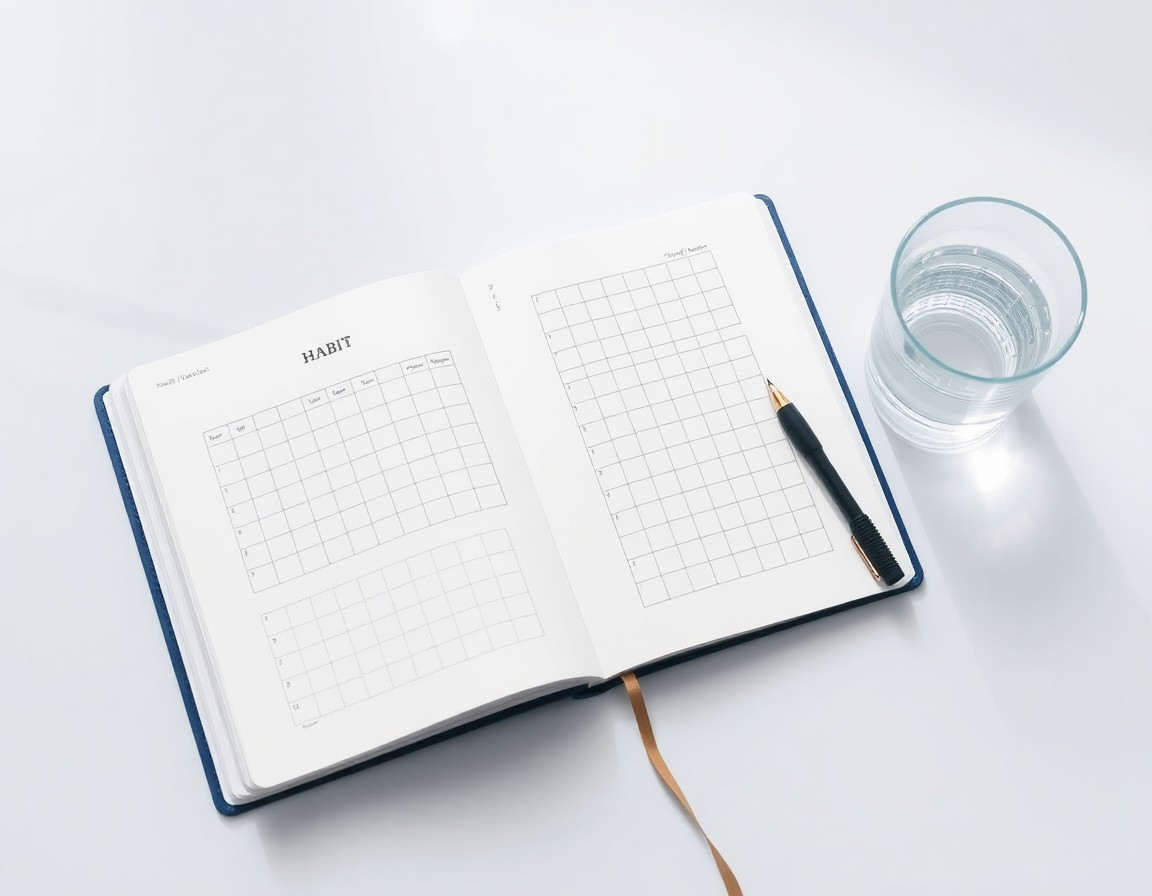
Tracking your water intake sounds like the most bureaucratic possible response to a simple problem. Thirsty? Drink. Why involve software? And yet ask anyone who's actually tried logging their drinks for a couple of weeks and you'll hear the same sheepish report: they drank more, without particularly trying to. That's not a coincidence or a placebo. It's one of the most reliable findings in behavior science, and it's worth understanding why it works — so you can use it without letting it use you.
Measurement changes the thing being measured
Psychologists call it the self-monitoring effect, and it shows up everywhere researchers look. People who keep food diaries lose more weight than people on the same diet who don't. Step counters increase walking even when nobody sets a goal. Simply writing down spending reduces spending. The mechanism is almost embarrassingly simple: the act of recording a behavior forces a moment of attention on it, and attention is where behavior change actually lives. You can't adjust a thing you never look at. Logging a glass of water takes two seconds, but those two seconds convert an unconscious behavior into a conscious one — and conscious behaviors are steerable.
It makes an invisible habit visible
Hydration has a particular problem that makes it perfect for tracking: it's invisible. You have no natural running total. Ask yourself how much you drank yesterday and you'll produce a guess, and research on self-reporting says your guess is generous. A day of drinking happens in a dozen forgettable sips scattered across meetings and meals, and by evening they've blurred into a vague sense of “probably enough.” Tracking replaces that vague sense with a number. Sometimes the number is reassuring. Often it's a small shock — the discovery that your “pretty good” hydration day was one liter, most of it coffee. Either way, you now know something you genuinely didn't know before, and that knowledge does the nagging for you.
It closes the intention–action gap
Almost everyone intends to drink more water. Almost nobody is against hydration. The gap between that intention and the actual glass is where the habit dies, and it's rarely a motivation problem — it's a feedback problem. Your intention lives in the morning; the failure happens silently at 4 p.m., and you only find out (if you ever do) after the day is unrecoverable. A tracker moves the feedback into the middle of the day, while there's still time to act. A glance at lunchtime that shows you at 20% isn't a guilt trip; it's an early warning with an obvious, cheap fix. You course-correct at 1 p.m. instead of regretting at 11.
Small wins, delivered immediately
Hydration's other design flaw is that its rewards are slow and diffuse. Drink well for a week and you might notice better focus or fewer afternoon headaches — but “might, in a week” is a terrible reinforcement schedule for building a habit. Tracking hacks the timeline. The moment you log a glass, something happens: the number climbs, the level rises, the day looks visibly better than it did ten seconds ago. That tiny completion — the same small dopamine hit as checking off a to-do — gets stapled to the act of drinking. The brain starts wanting the log, and the water rides along. It sounds too mechanical to work on a grown adult. It works on essentially all grown adults.
Streaks, used gently
Then there's the streak. Behavioral economists talk about loss aversion — losing something stings roughly twice as much as gaining the same thing feels good — and a streak converts your track record into exactly the kind of thing you don't want to lose. A twelve-day streak is a surprisingly effective 8 p.m. argument for drinking one more glass. Used gently, that's a feature: it recruits a lazy quirk of your psychology to do the motivating on days when you can't be bothered. The word doing the work in that sentence is gently. The streak is a servant, not a judge — a distinction that matters enough to get its own section.
The caveat: tracking serves the habit, not the reverse
Any tracking tool can curdle into obsession, and hydration is no exception. Warning signs: logging feels like a chore you dread, a broken streak genuinely spoils your evening, or you're drinking water you don't want at 11 p.m. to satisfy an app. That's the tail wagging the dog — the point was never the number, it was the drinking. (Chugging to close a ring isn't even physiologically useful — pacing matters, as our overhydration guide explains.) If tracking starts costing more peace than it buys, loosen it: round your logs, ignore the streak for a week, or track only until mid-afternoon. A tracker that makes you feel worse is misconfigured, no matter what the data says.
What good-enough tracking looks like
Effective tracking is lazy tracking. You don't need milliliter precision — you need a tap when you drink and a level you can glance at, and being wrong by 10% changes nothing about what the data tells you. This is the philosophy Realwater is built around: your day is a sphere of water, one tap logs a glass, and the level rising is the entire interface. No forms, no charts demanding analysis, no guilt screens — just enough feedback to make the invisible visible and the small win immediate, which, as this whole article has argued, is the part that actually changes behavior.
Eventually, you'll need it less
Here's the ending most tracking apps won't put in writing: the goal of tracking is to need less of it. In the early weeks, the log is doing heavy lifting — building awareness, catching bad days, stapling rewards to glasses. But somewhere along the way the habit takes over: the bottle lives on your desk, the morning glass pours itself, and the tracker shifts from coach to occasional referee. Plenty of long-term users end up logging loosely or only on chaotic days, and that's not falling off the wagon — that's the wagon arriving. Track tightly while the habit is soft, loosely once it's firm, and let the app's job be to make itself mostly unnecessary.