Ask people why their hydration goal fell apart and you rarely hear “I decided it wasn't worth it.” You hear “I just forgot.” It's the top failure mode by a mile: the intention survives, the water bottle survives, but the remembering doesn't. Three meetings in, it's 4 p.m., you've had nothing but coffee, and the headache is already filing its report. The fix isn't a better memory — it's a system that doesn't need one.
Forgetting is a design problem, not a discipline problem
Drinking water is uniquely forgettable. It's low-urgency — skipping a glass never hurts right now — and thirst is a sluggish alarm that's easy to misread as boredom or fatigue and easy to shelve when you're absorbed in work. By the time thirst gets insistent, you're already behind, and the early costs show up in disguise: flagging focus, a low-grade headache, an inexplicably grumpy afternoon. Prospective memory — remembering to do something later — is simply one of the weakest faculties we have. So stop assigning it the job.
Let your environment do the remembering
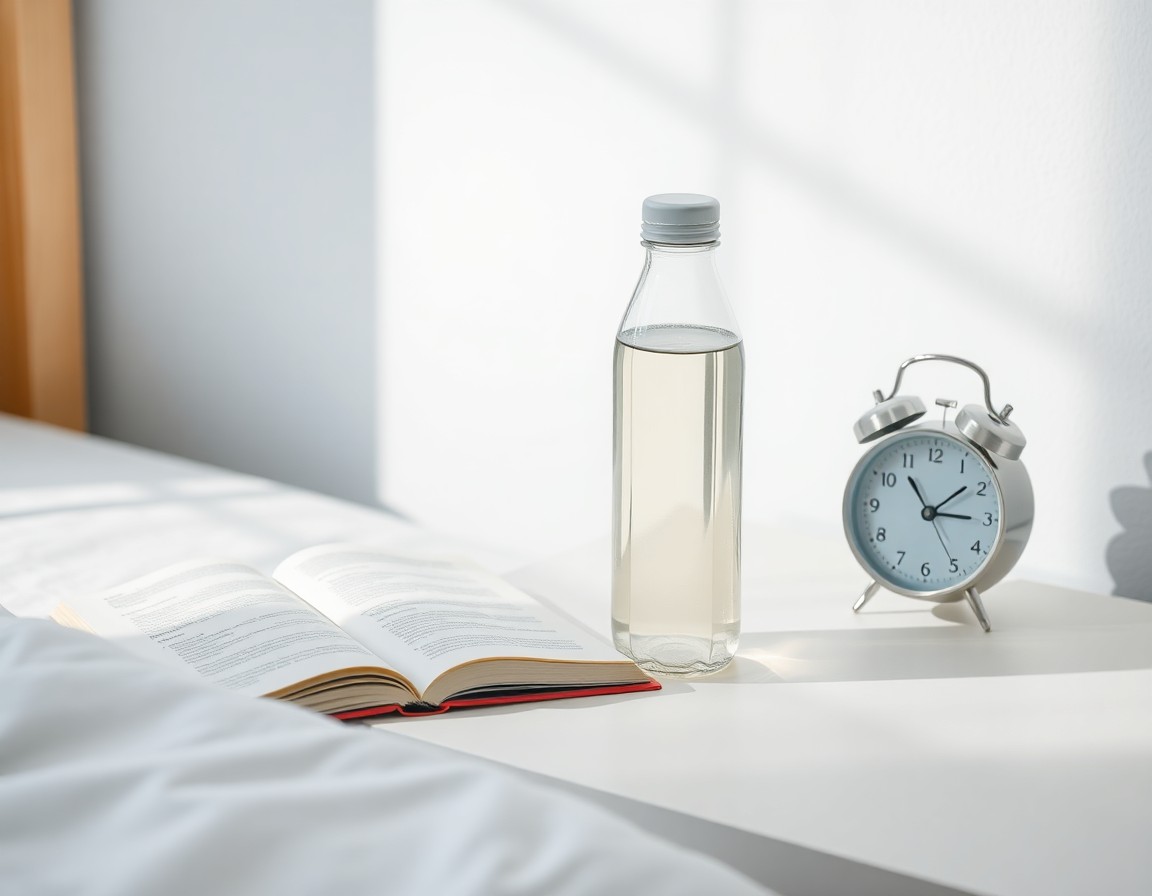
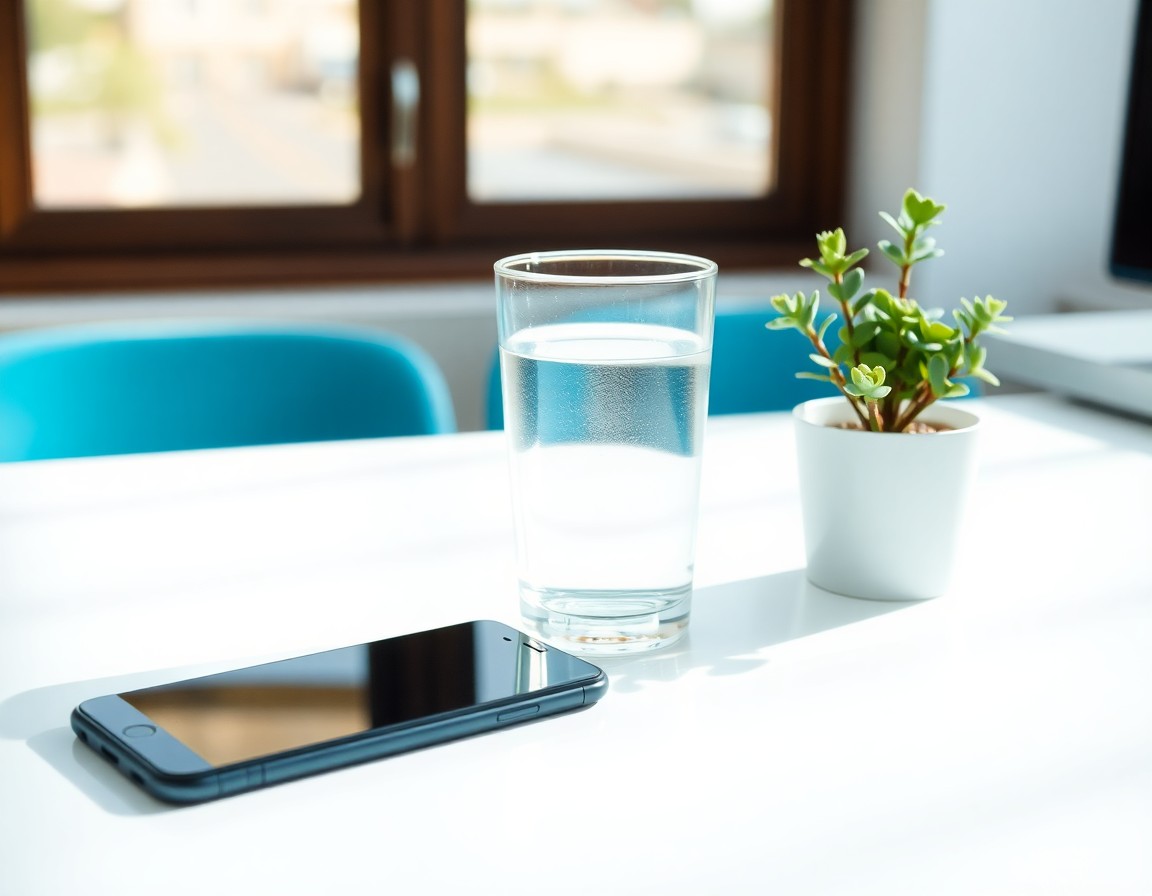
The most reliable reminder isn't a thought; it's an object in your line of sight. A visible bottle on your desk gets drunk from; one in your bag does not. This is the whole strategy: place water where your eyes already land. A bottle next to your monitor, a glass at every workstation you rotate through — desk, kitchen table, home office — one by the bed, one near the couch. Each becomes a silent cue that fires dozens of times a day at zero cost, and because the water is already within reach, noticing and acting are the same motion. Cheap, dumb, astonishingly effective.
Piggyback on things you never forget
The second system is habit stacking: attach water to routines that already run on autopilot. You never forget your morning coffee, so a glass of water while it brews is a freebie. You never forget lunch, so a glass before eating comes along for the ride. Joining a meeting, finishing a bathroom break, closing the laptop — each is a reliable anchor that can tow a sip behind it. Stacked cues need no memory at all, which is exactly why they work; we go deeper on this in our guide to building a water habit.
The trouble with hourly nags
Reminders on your phone seem like the obvious answer, and done badly they're the fastest way to fail. The classic setup — a fixed alert every hour — ignores everything about your actual day. It buzzes while you're mid-presentation, buzzes right after you drank, buzzes at the same clockwork intervals until your brain correctly classifies it as noise. This is notification fatigue: each ignored alert makes the next easier to ignore, swipe-away becomes a reflex, and within two weeks you disable the whole thing — concluding, wrongly, that reminders don't work. What failed wasn't the reminder; it was the dumbness of it.
What a good reminder looks like
Reminders that survive share three traits. They're aware: they know what you've already logged, so they never nag you about water you just drank — silence after a glass is what keeps the signal trustworthy. They're well-timed: spaced across your waking hours and nudging hardest in the stretches where you actually fall behind, not firing on a metronome. And they're gentle: a quiet “you're a bit behind” you can act on in five seconds, not an alarm demanding tribute. A reminder like that stays rare enough to keep meaning something — which is the entire game, because a reminder you trust is a reminder you don't disable.
Close the loop with tracking
There's a quieter reason to log your glasses, too: you can't remember what you never measured. Most people genuinely believe they drank more than they did — until a tracker shows them the 11 a.m. to 4 p.m. desert in their day. Logging turns “did I drink enough?” from a guess into a glance, and that visibility alone changes behavior. This is the combination Realwater is built on: one tap logs a glass, a water sphere fills toward your daily goal so your status is obvious at a glance, and smart reminders stay silent when you're on track and nudge gently when you're not. The app remembers, so you don't have to.
Stack the systems, drop the guilt
None of these systems is the whole answer; together they're overkill in the best way. The visible bottle catches your eye between tasks, the coffee-and-lunch stacks carry the morning, and a well-behaved reminder sweeps up whatever slips through. Redundancy is the point — on the day one cue fails, another fires. Build the layers once, and “remembering to drink water” quietly stops being a thing you do. It becomes a thing your day does for you.