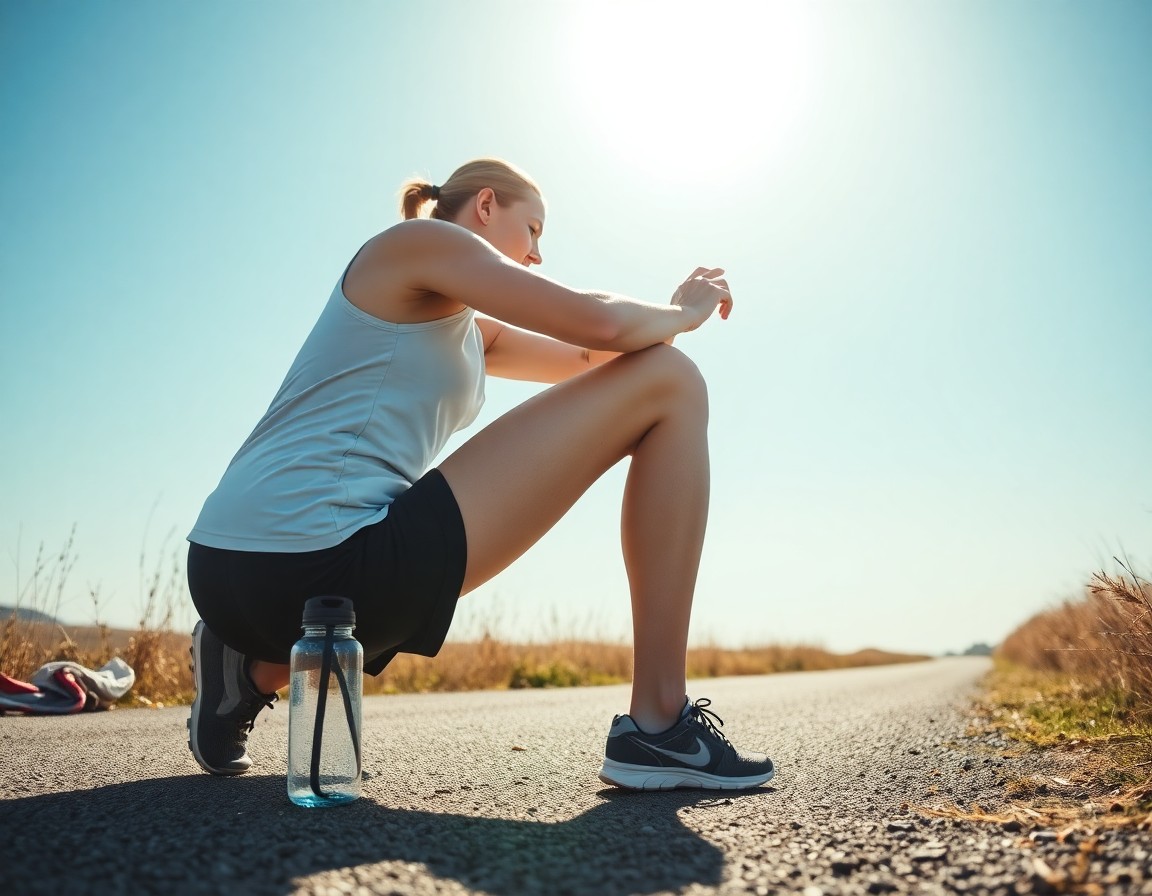
Most gym hydration advice is written for marathoners and then copied over to everyone else. But a 45-minute strength session in an air-conditioned room is not a two-hour run in July, and treating them the same means either hauling a two-liter jug between sets or forgetting to drink at all. Here's a practical way to think about water before, during, and after a workout — scaled to what you're actually doing.
Why it matters even for a short session
The research is fairly consistent: once you've lost around 2% of your body weight in fluid, endurance performance starts to slip, and perceived effort climbs — the same set feels harder. Strength and power are more resilient; small deficits don't seem to cost you much on a heavy single. But high-rep work, circuits, and anything that raises your heart rate for long stretches behave more like endurance exercise, and that's where turning up already thirsty starts to hurt. The bigger everyday cost is simpler: dehydration makes training feel worse, and training that feels worse is training you skip.
Before: arrive topped up, not sloshing
The single most useful habit is to start hydrated. Aim for roughly 300–500 ml of fluid in the one to two hours before you train, sipped rather than downed at the door. That window gives your body time to absorb what it needs and let go of what it doesn't, so you aren't stopping for the bathroom mid-warm-up. If you train first thing in the morning, you're starting from a mild overnight deficit — a glass on waking and another on the way to the gym covers it. A quick check: if your urine before training is pale yellow, you're in good shape; if it's dark, drink a bit more and give it twenty minutes.
During: sip on a rhythm, scaled to sweat
Inside the session, the general guidance is to sip 150–250 ml every 15–20 minutes, which works out to somewhere between 400 ml and a liter an hour. Treat the low end as the default for a cool room and a moderate pace, and the high end for hot studios, heavy sweaters, and hard intervals. Sipping beats gulping: smaller amounts empty from the stomach comfortably and don't bounce around during burpees. The easiest way to make this automatic is to tie a drink to something you already do — a mouthful at the end of every set, or every time the interval timer resets.
Lifting vs. HIIT vs. classes
Not every session drains you the same way, and your plan should reflect it. A strength session has long rests and relatively modest sweat rates, so most people are fine sipping between sets from a bottle they brought in already half full. For an hour in a normal gym, 300–600 ml during training is usually plenty.
HIIT and circuits are a different story. Sweat rates can double, and the short rests make it easy to forget to drink at all. Plan a sip at every rest interval rather than waiting for thirst, and lean toward the higher end of the range. The same goes for group classes — spin, boxing, hot yoga — where a packed, warm room drives sweating up further. In heated classes, fluid losses of a liter or more in an hour are common, so arrive well topped up and don't be shy about drinking during the flow. If you train outdoors or in an unairconditioned space in summer, our hot-weather guide has more on adjusting for heat.
When electrolytes actually matter
Plain water is the right choice for the large majority of gym sessions. Sweat does carry sodium, but a normal diet replaces it comfortably over the rest of the day. Electrolytes start to earn their place when a session runs past 60–90 minutes, when you're a visibly heavy or salty sweater (white streaks on dark clothing are a giveaway), or when you're training twice in a day in the heat. In those cases a sports drink or a pinch of salt in your bottle helps you hold on to the fluid you drink. For everything else, it's mostly marketing. We break down what the different minerals do in our guide to electrolytes.
After: replace what you lost — and a little more
You keep sweating and breathing off water after the last set, and you continue producing urine while you rehydrate, so replacing exactly what you lost tends to leave you short. The standard recommendation is to drink about 1.25–1.5 times the fluid you lost over the next couple of hours. If you lost half a kilo on the scale, that's 600–750 ml. Pair it with a meal — the sodium and carbohydrates in normal food help your body retain the water rather than pass it straight through. Milk, for what it's worth, scores surprisingly well as a post-workout rehydration drink for exactly that reason.
Don't overdo it
More is not automatically better. Drinking well beyond what you sweat out — especially plain water over a long session — can dilute blood sodium, a condition called hyponatremia. It's rare in the gym and mostly a concern for very long endurance events, but the principle stands: you're aiming to roughly match losses, not to drink as much as you can hold. If you feel bloated, sloshy, or your urine has been completely clear all afternoon, you can ease off. Our post on how much is too much covers the warning signs.
Learn your own sweat rate
All the ranges above are averages, and sweat rates vary enormously — from under half a liter an hour to well over two. The good news is that yours is easy to measure. Weigh yourself before a session (ideally after using the bathroom, in minimal clothing), train as normal while noting how much you drink, towel off, and weigh yourself again. Each kilogram lost is roughly a liter of sweat; add back what you drank, and divide by the session length to get your hourly rate. Do it once for a typical lifting day and once for a hard conditioning day, and you'll know your numbers better than any chart. Our sweat rate calculator does the arithmetic, and the exercise hydration calculator turns it into a before, during, and after plan for your next session.
Once you know roughly what a session costs you, the day-to-day part is just remembering to make it up. That's where Realwater fits in: log the bottle you finish at the gym with a tap, and the water level on your phone shows whether you've actually closed the gap by evening or just meant to. Training days are the days most people fall short without noticing — a visible target fixes that.
This article is for general information and isn't medical advice. If you have a heart or kidney condition, take medication that affects fluid balance, or have been advised to limit fluids, follow your doctor's guidance.