“Drink eight glasses a day” sounds wonderfully concrete until you look at your own cupboard. Is a glass the little tumbler from the dinner set? The pint glass you actually reach for? The mug? The half-liter bottle on your desk? Hydration advice loves the word “glass,” but almost nobody agrees on what one holds — and that vagueness quietly wrecks more tracking attempts than laziness ever does. Let's pin the numbers down.
The classic glass: about 250 ml, or 8 oz
When health guidelines, recipes, or apps say “a glass,” they almost always mean the standard cup measure: about 250 milliliters, or 8 fluid ounces. It's the unit hiding inside the famous eight-glasses rule — eight times 250 ml is 2 liters, which is also a reasonable daily fluid target for most adults. So if you only remember one number from this article, make it this one: a “glass” is 250 ml, whatever the vessel in your hand happens to be.
What common vessels actually hold
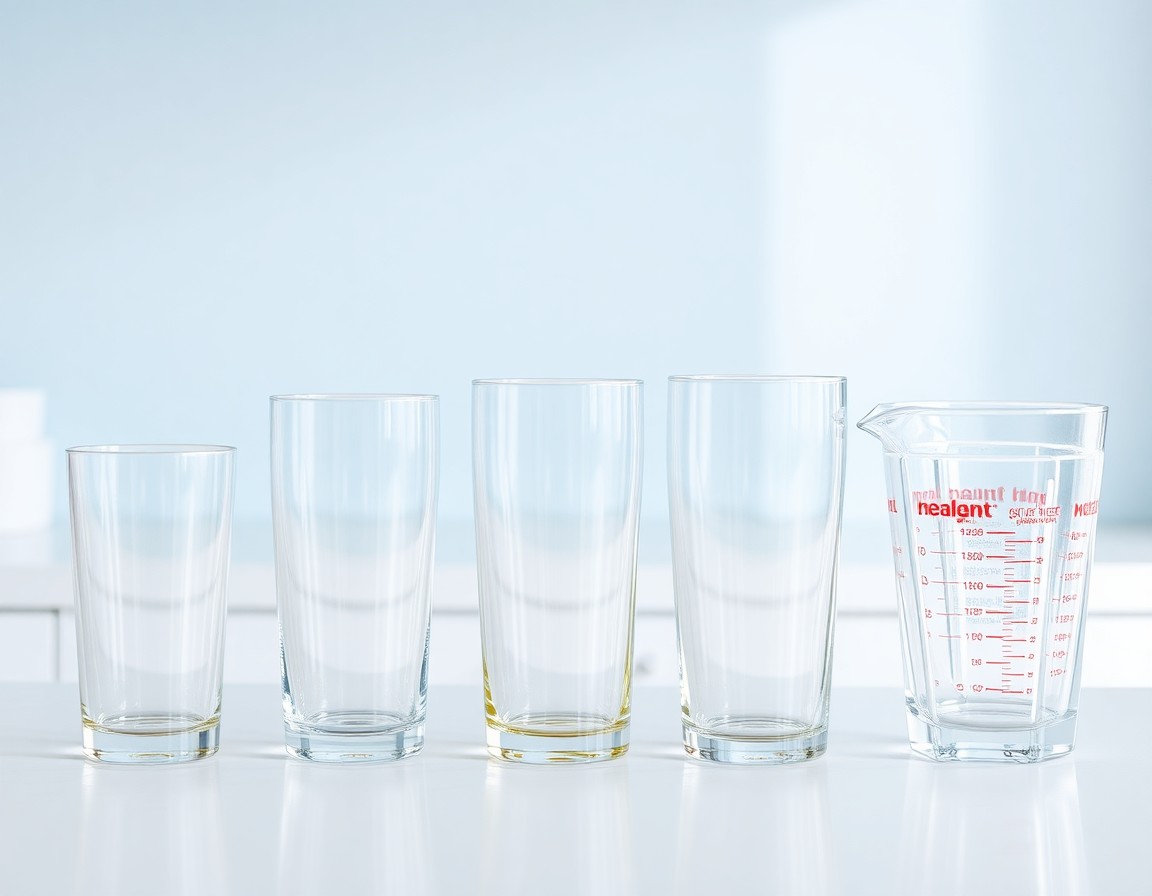
Real drinkware, of course, ignores the standard. Typical sizes look like this:
- Small tumbler or juice glass: about 200 ml
- Standard glass: about 250 ml — the classic “one glass”
- Mug: 300–350 ml for most coffee mugs, more for the oversized ones
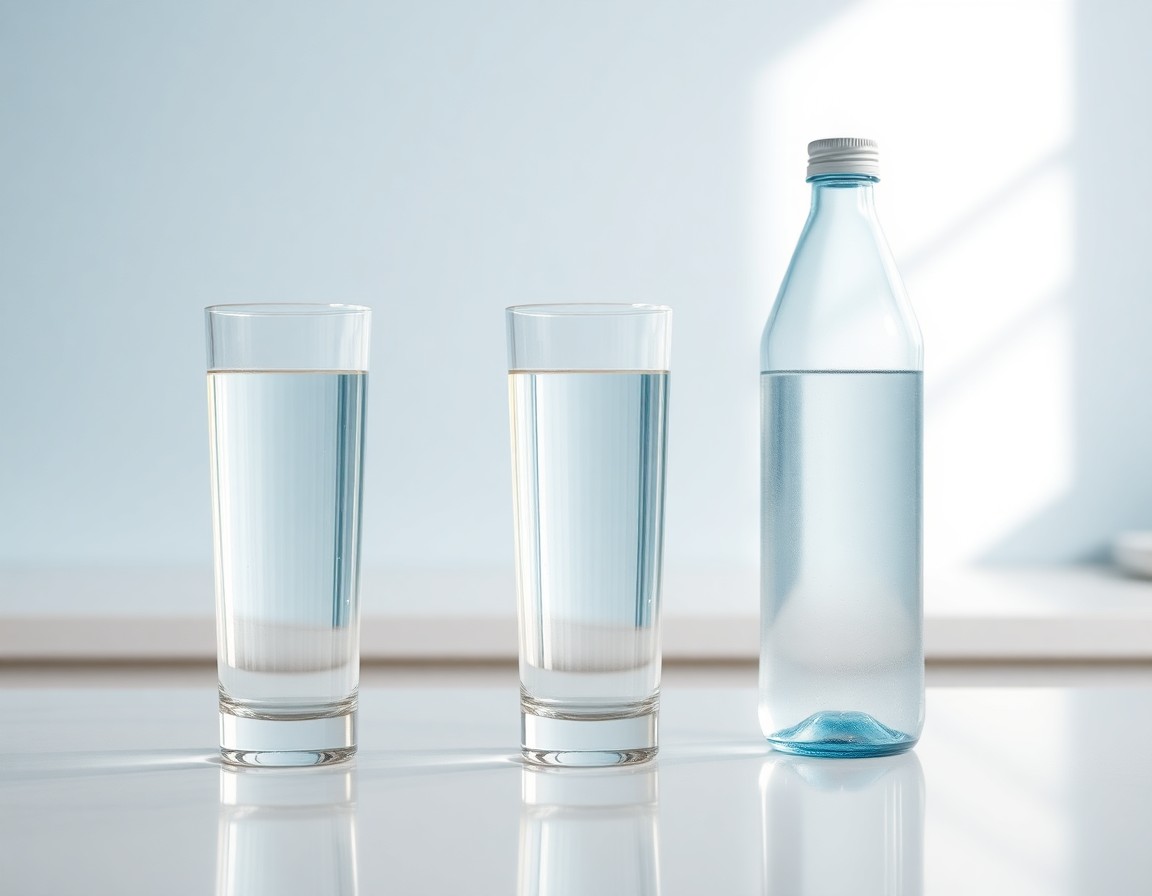
- Typical water bottle: 500 ml — two glasses in one
- Large bottle: 750–1,000 ml — three to four glasses
Notice the spread: the biggest common vessel holds five times the smallest. Two people who each “drank six glasses today” might differ by well over a liter.
Ounces vs. milliliters, without the headache
If you drift between American and metric labels, two anchors cover almost everything: 1 fluid ounce is about 30 ml, and 8 oz is about 250 ml (237 ml if you want to be precise — you don't). From there the common sizes fall into place: a 12 oz can is roughly 355 ml, a 16 oz pint or large tumbler is about 475 ml — call it a half liter — and a liter is just under 34 oz. Hydration tracking never needs more precision than that; being consistently within 10% beats being occasionally exact.
One small wrinkle for the internationally curious: a UK fluid ounce (about 28.4 ml) is slightly smaller than a US one (about 29.6 ml), and an old-style imperial pint is 568 ml to the American pint's 473. For logging water, the difference is genuinely ignorable — it's a few percent, far smaller than the error of eyeballing a glass in the first place. Pick one system, round generously, and move on.
Why serving-size confusion wrecks tracking
Here's the trap: tracking only works when the number you log resembles the amount you drank. Logging changes behavior because it gives you honest feedback — but if you count your 200 ml tumbler as a full glass all day, you end the day believing you've hit 2 liters while actually stopping at 1.6. Do that daily and your “streak” is quietly built on a 20% shortfall. The error compounds in the other direction too: count every mug and pint as one glass and you may be drinking plenty while your app nags you to catch up, which is exactly the kind of pointless friction that makes people quit tracking altogether. The fix isn't obsessive measuring. It's calibrating once.
Calibrate your favorite glass — once
You almost certainly drink from the same two or three vessels every day: a desk glass, a mug, a bottle. Measure them one time and the problem disappears forever. Fill your usual glass to where you actually fill it — not the brim — then pour it into a measuring jug. No jug? Bottles are pre-calibrated: a 500 ml bottle fills a 250 ml glass exactly twice. Round to the nearest 50 ml, remember the number, and you're done. Thirty seconds of kitchen science turns every future log from a guess into a measurement, because you're not estimating volumes anymore — you're counting refills of a known container.
Two calibration details worth knowing. First, measure your real fill line: most people pour to two or three centimeters below the brim, which can shave 15–20% off the printed capacity. Second, remember that not everything in a vessel is water — a mug of coffee counts toward your fluids (yes, coffee counts), but a glass packed with ice holds noticeably less liquid than the same glass filled to the top. Calibrate the way you actually drink, not the way the manufacturer imagined.
Make logging match how you actually drink
Once your vessels are calibrated, the best logging strategy is the laziest one: log by container, immediately, in round numbers. Finish the desk glass, log it. Empty the bottle, log it. Don't wait until evening to reconstruct the day from memory — recall is the least accurate measuring tool you own. This is exactly how Realwater is built to work: set your glass size once, and from then on a single tap logs it while the water sphere rises toward your daily goal. One known container, one tap per refill, and a glance tells you where you stand — with gentle reminders if the afternoon gets away from you.
So: a glass is 250 ml, your glass is whatever the measuring jug says, and accurate tracking is just counting refills of a container you measured once. Pin those down and the eight-glasses question stops being a riddle — it's two bottles, or four mugs, or however many of your glass it takes. That's a number you can actually hit.